DETOUR
A quieter way to rediscover the city
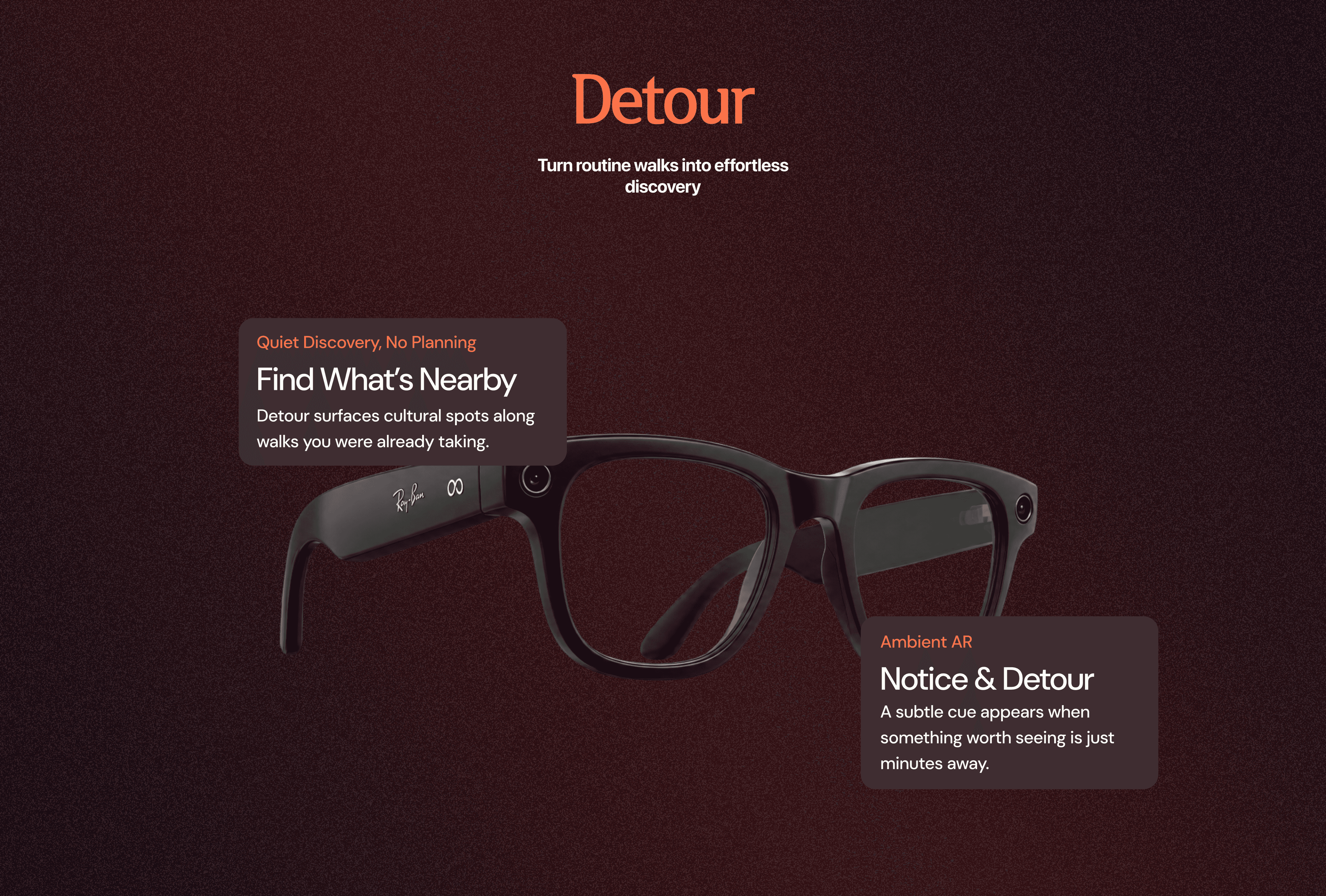
An ambient AR experience for Meta glasses that surfaces nearby discoveries along the routes people already walk.
The city never got boring. Our routines did.
ROLE
Product design
Interaction design
AI-assisted prototyping
PLATFORM
Meta glasses
AR overlay
TIMELINE
3 weeks
RESULT
2nd Runner Up
UXAThon 2026
Context
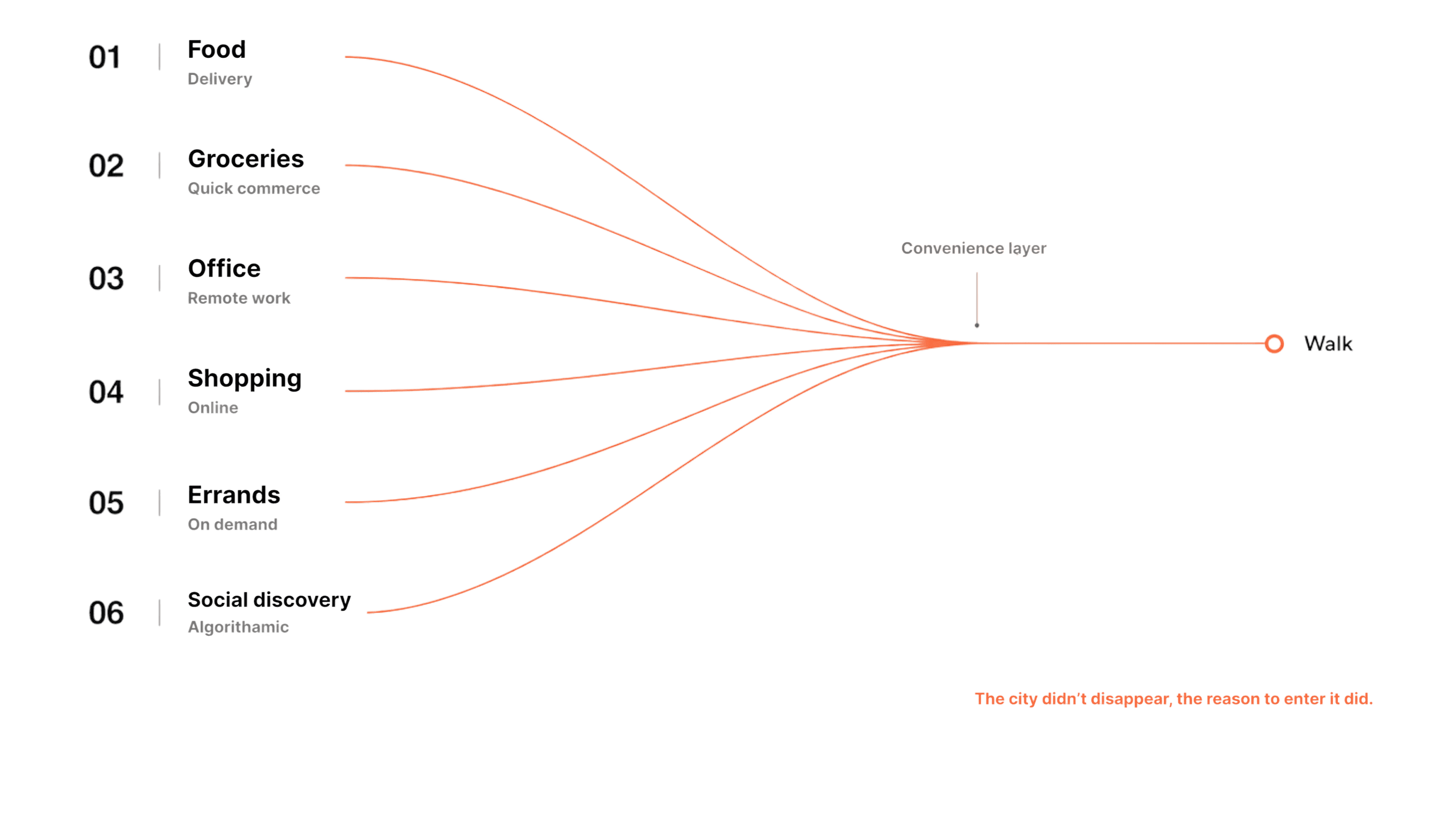
By 2040, remote work and on-demand services have made staying inside effortless. Groceries arrive. Lunch arrives. Errands shrink into taps.
People didn’t stop being curious. Going outside just stopped being necessary.
Detour explores how AR could make existing outdoor routines feel alive again.
Convenience made the city optional - Most reasons to go out were absorbed by convenience. Only the walk remained
Core Insight
Don’t build new habits. Enrich existing ones.
The commute, coffee run, and dog walk already happen. They are already outdoor, physical, and routine.
Detour works inside those moments instead of asking users to create new ones.
Discovery should appear when you’re already moving, not when you decide to search.
Why AR?
The medium was the design decision
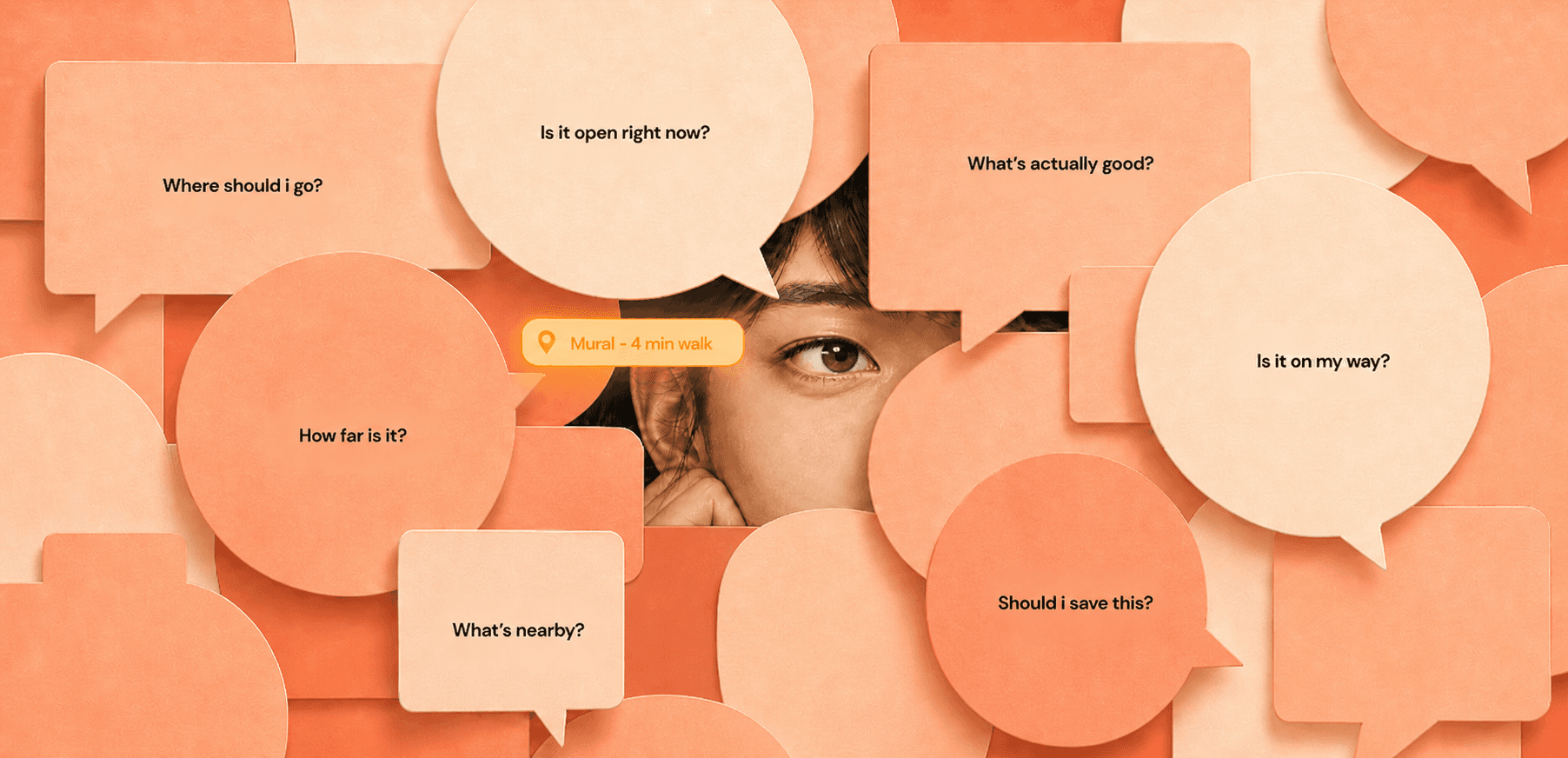
A phone app turns discovery into a chore:
pull it out, open it, search, scan, compare, judge, decide.
That is too much effort for a moment that should feel lightweight.
Detour uses AR glasses to reduce that effort to almost nothing: one ambient cue, one glance for context, and one simple choice to engage or keep walking.
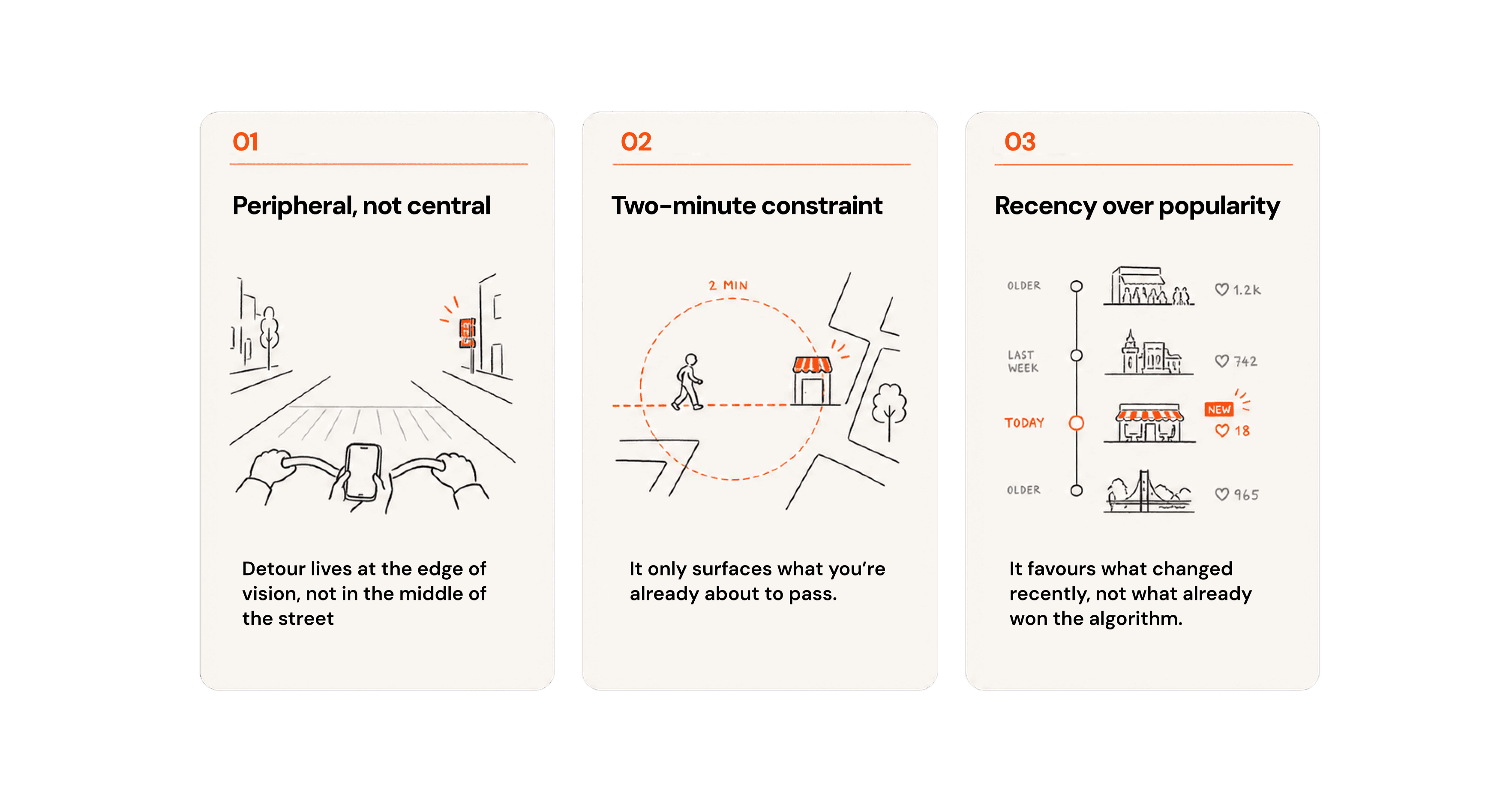
Design Rules
Don’t build new habits. Enrich existing ones.
Prototype Build
AI-assisted prototype, structured like an AR state machine
The prototype runs as a single-page interaction demo with live state changes, animated AR overlays, route prompts, scanning interactions, visitor stories, and feedback controls. It let me test the full experience as a sequence: when the system appears, how it guides the user, when it reveals context, and how it returns back to a quiet ambient state.
The flow was structured as:
onboarding → ambient home → route prompt → route guidance → arrival → mural scan → visitor story → feedback
Built with HTML, CSS, and JavaScript, the prototype uses camera-style views, layered HUD components, timed transitions, route-state changes, a scanning reticle, carousel interactions, and lightweight feedback inputs to simulate how Detour would behave on AR glasses.
This helped me evaluate the product as an experience in motion, not just as an interface on a screen.
Solution Video
Prototype: discovery without the scroll
The walkthrough follows a regular Brooklyn walk: Detour detects nearby opportunities, offers an optional route, guides the user to a mural, reveals its story, and captures lightweight feedback.
ambient cue → optional route → guidance → arrival → story → feedback
A small nudge can change the shape of a walk
The prototype shows that discovery can be ambient instead of effortful. It keeps the walk primary, the decision small, and the city as the main character.
Reflection
Designing for less effort, not more engagement
The hardest part wasn’t making AR feel futuristic. It was making it quiet enough to belong in someone’s day. Detour works because it does not ask people to become explorers. It notices when exploration is already nearby.
The challenge wasn’t helping people discover more. It was asking less from them.